Call or Text: (859) 304-0629

How to Remodel Your Kitchen with Transitional Style

1. What Makes a Kitchen “Transitional”?

  • Clear definition in homeowner-friendly terms

  • How it blends traditional warmth with modern simplicity

  • Why it’s ideal for remodels (timelessness, flexibility, resale value)

2. Key Design Elements That Define Transitional Kitchens

  • Cabinet styles (shaker, inset, mixed finishes)

  • Neutral color palettes that won’t feel dated

  • Balanced materials: stone, wood, metal

  • Streamlined hardware + subtle decorative details
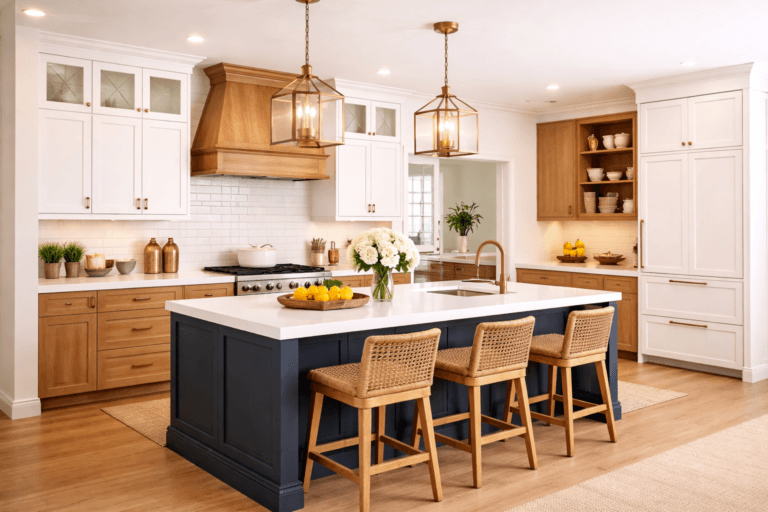
3. Layout Choices That Work Best in Transitional Spaces

  • Open-concept vs. semi-open (and which fits different home layouts)

  • Islands that provide both prep space and social space

  • How to keep a classic layout but modernize the flow

4. Appliances & Fixtures: Choosing Pieces That Fit the Style

  • Panel-ready appliances for a softer look

  • Transitional-style faucets & sinks (bridge, apron-front, understated modern)

  • Lighting: mixing pendants and recessed lights without visual clutter

5. Storage Solutions That Maintain Clean Lines

  • Hidden or integrated storage

  • Glass-front upper cabinets used strategically

  • Pantry upgrades that support modern lifestyles (pull-outs, drawers, organizers)
Modern transitional kitchen

6. Materials & Finishes That Hold Up Over Time

  • Countertops that balance beauty and practicality (quartz, marble-look, butcher block accents)

  • Flooring choices that complement both classic and modern elements

  • Mixing metals the right way: when it works, when it doesn’t

7. Budgeting for a Transitional Kitchen Remodel

  • What typically costs the most and where you can save

  • Smart mid-range alternatives that still look high-end

  • Phased remodel ideas for homeowners who need to spread out costs


8. Common Mistakes Homeowners Make

  • Over-mixing styles

  • Choosing too many ornate or too many modern elements

  • Ignoring lighting and storage planning

9. How to Hire the Right Contractor

  • Questions homeowners should ask

  • How to vet portfolios for genuine transitional work

  • Red flags that indicate the design won’t age well